
Sip, Savor, Relax: Warming Winter Drinks
One of the best ways to enjoy cannabis during the cooler months is to infuse our potent elixirs into...
Read More
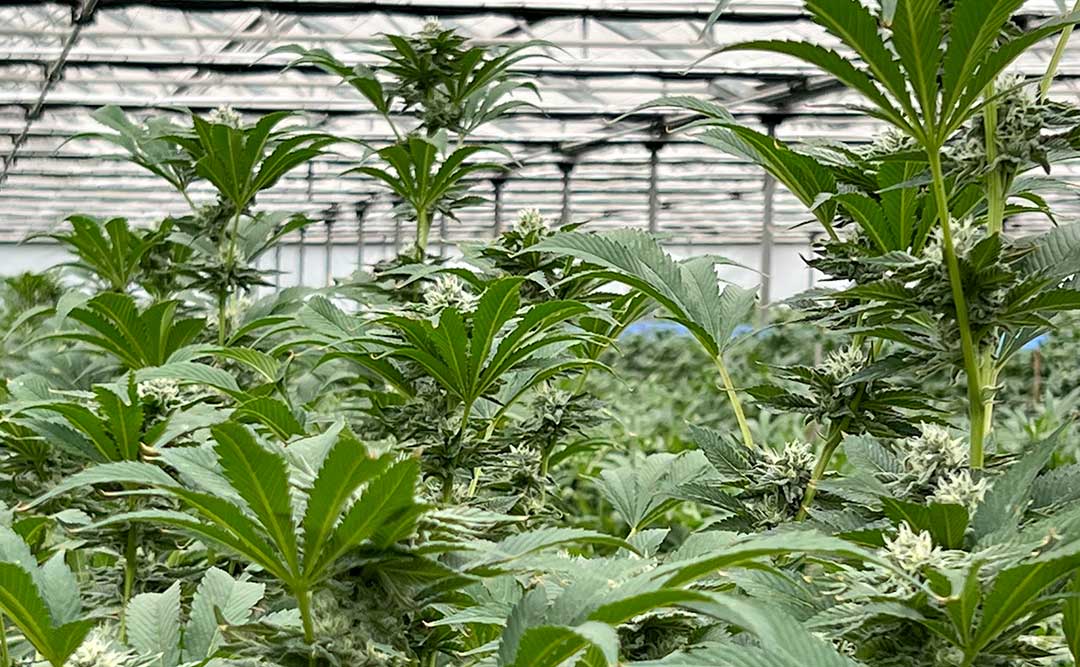
Zero-Pesticide Sungrown Cannabis

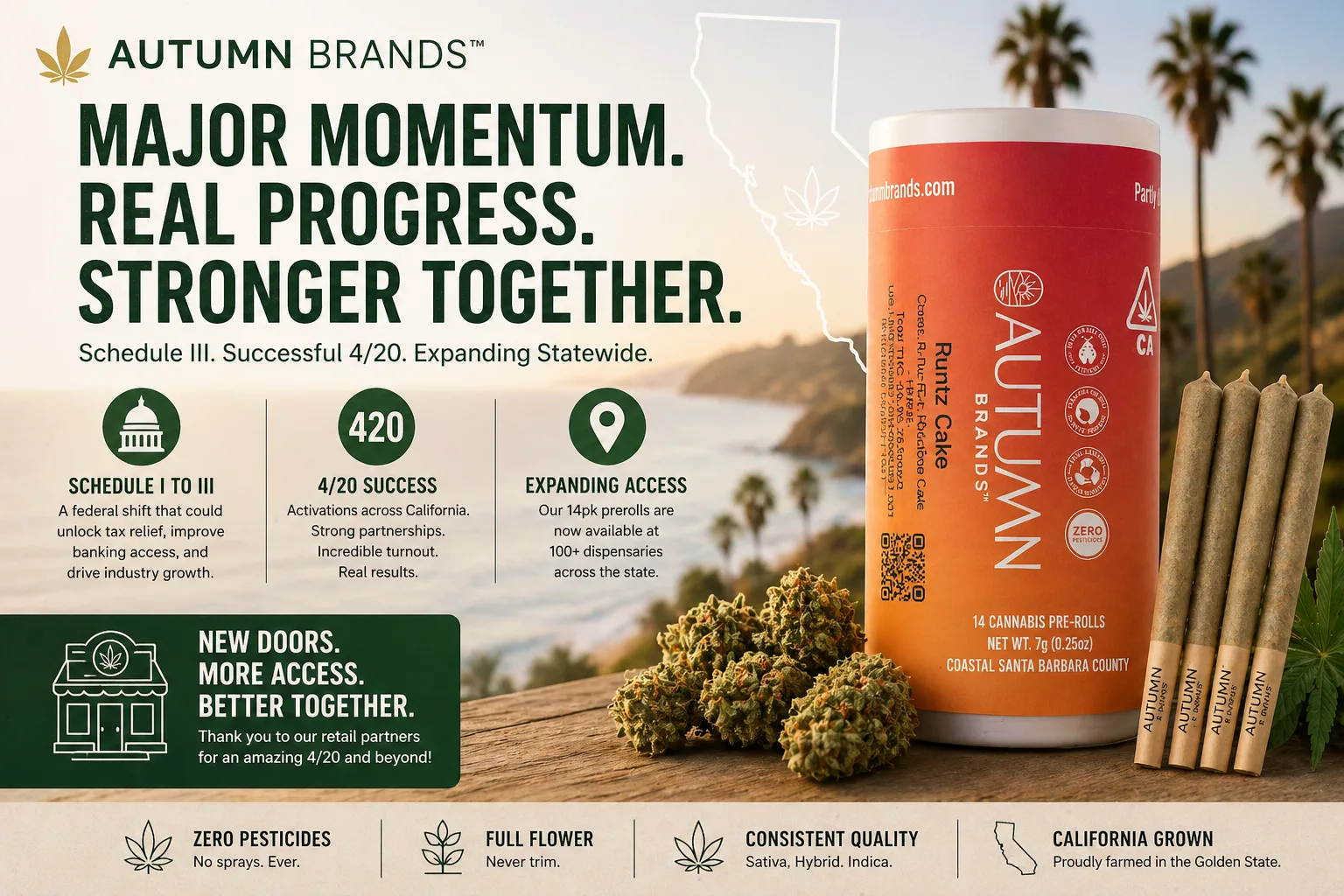
The potential shift of cannabis from a Schedule I to a Schedule III substance marks one of the most significant regulatory developments in decades. While implementation is still evolving, this cannabis schedule III reclassification signals meaningful progress toward broader normalization of the industry.
For cannabis operators—especially cultivation businesses—this change could have a direct financial and operational impact. One of the most discussed benefits is the potential relief from IRS Code 280E, which currently prevents cannabis businesses from deducting standard operating expenses. Moving to Schedule III could unlock more traditional tax treatment, allowing companies to reinvest in growth, staffing, and infrastructure.
Beyond tax implications, the shift also strengthens the legitimacy of cannabis in the eyes of financial institutions. This may open the door to improved banking access, lending opportunities, and more stable financial operations across the supply chain. For a family-owned, zero-pesticide farm like Autumn Brands, these changes reinforce a long-standing commitment to quality, transparency, and sustainable growth.
While cannabis schedule III reclassification does not immediately solve every regulatory challenge—especially within California’s existing framework—it is a strong step forward that aligns federal policy more closely with consumer reality.
This year’s 4/20 proved that strategic execution, strong retail partnerships, and consistent product offerings can drive meaningful results. Instead of focusing on a single-day spike, Autumn Brands approached 4/20 as a full activation window—spanning multiple days and retail touchpoints across California.
The results were clear:
Retailers leaned into value-driven purchasing behavior, and consumers responded. Multipack prerolls, especially the 14-pack format, performed exceptionally well due to their balance of quality, convenience, and price.
This statewide 4/20 success underscores a broader trend: consumers are prioritizing consistency and reliability. They want products they can return to again and again—something Autumn Brands has built into its Grower’s Collection approach across Sativa, Hybrid, and Indica offerings.
One of the biggest drivers of recent growth has been the rapid expansion of Autumn Brands’ 14-pack prerolls (7g total, full flower) into new dispensaries across California. Designed as a high-quality, value-forward product, these prerolls are made with 100% full flower—never trim—and reflect the brand’s commitment to zero-pesticide cultivation.
The expansion includes a wide range of retailers, from high-volume chains to independent dispensaries, strengthening statewide accessibility.
Recent additions and expanded partnerships include:
This growing footprint reflects strong retail demand and continued confidence in the product.
The success of 14-pack prerolls isn’t accidental—it’s the result of aligning product design with consumer behavior.
By offering stable Sativa, Hybrid, and Indica blends, customers know exactly what to expect. This reliability builds repeat purchasing habits, especially in a crowded market.
Unlike many value-driven prerolls, these are made with premium flower—not trim—delivering a noticeably better experience in flavor, burn, and effect.
With competitive pricing and a total of 7 grams per pack, the format hits a sweet spot between affordability and quality.
Autumn Brands’ commitment to using no sprays of any kind—synthetic or organic—continues to resonate with increasingly educated consumers looking for clean cannabis.
Between the potential impact of cannabis schedule III reclassification, a highly successful 4/20 activation period, and rapid retail expansion, the trajectory is clear: momentum is building.
For retailers, this means stronger-performing SKUs and dependable supply. For consumers, it means better access to clean, consistent cannabis products. And for the broader industry, it signals a shift toward long-term sustainability and normalization.
Autumn Brands remains focused on delivering high-quality, pesticide-free cannabis while expanding access across California. As new regulatory developments unfold and retail partnerships deepen, the goal remains the same: provide products consumers trust—and can find again and again.

LIC. NO.:
CCL24-000883 CCL24-0000884 CCL24-0000885 CCL18-0000242 CCL18-0000244 CCL18-0001318 CCL21-00004879 CCL21-00004881 CCL18-0000243 CCL18-0000235 CCL24-0000886 CCL24-0000887 CCL24-0000891 CCL24-0000888 CCL24-0000889 CCL18-0002738 C11-0001789-LIC C11-0001978-LIC


